


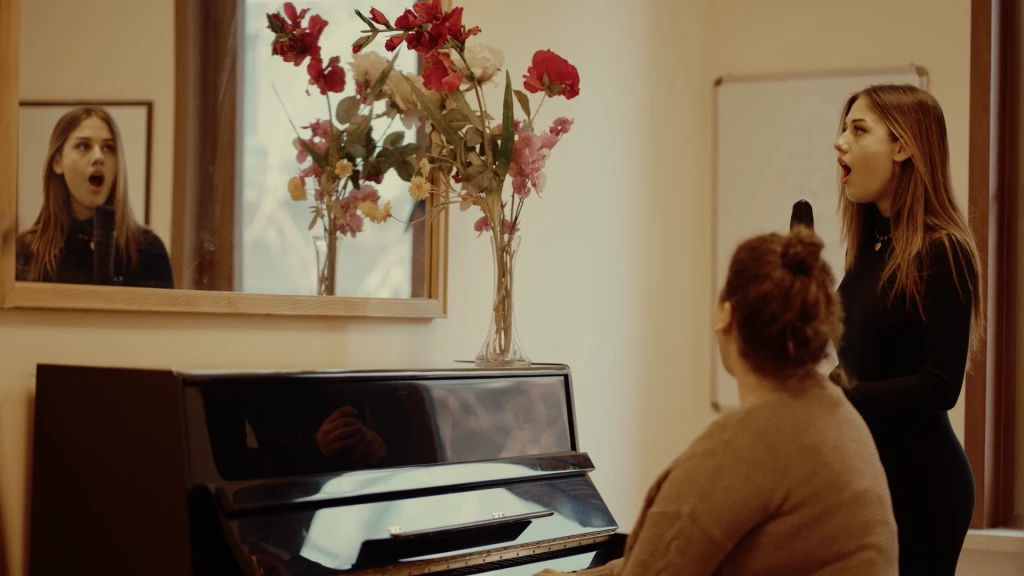
Preparatory Courses for Conservatories: Opening the Doors to a Future Filled with Art
Preparatory courses for conservatories are the most important companions for every young talent who dreams of bringing their art to the stage or expressing themselves through the universal language of music. This process represents much more than passing an exam; it is a challenging yet rewarding marathon in which a candidate showcases their artistic vision, discipline, technical knowledge, and passion. In a metropolis like Istanbul, where art thrives at the heart of the city, taking the right steps on this path is essential to achieving your goals. At Taksim Sanat, we guide candidates not only to fill their gaps but also to unlock their full potential with professional mentorship throughout this demanding preparation period.
A conservatory is a sacred institution where talent is combined with academic knowledge, and the foundations of a professional artistic identity are laid. The entrance exams to this institution assess candidates’ knowledge, interpretative abilities, stage presence, and artistic aptitude through a multi-layered evaluation process.
Thus, preparation for these exams requires a structured, personalized, and expertly guided training program, rather than random or last-minute efforts. This program should be tailored according to the department the candidate aims for (music, theater, opera, ballet, etc.), and the strengths and weaknesses of each student must be carefully analyzed.
Preparatory Courses for Conservatories: The First Step Toward Your Dreams
Preparatory courses for conservatories are one of the most valuable investments a student can make in their artistic career. The primary goal of these courses is not only to prepare the candidate for the technical requirements of the exam but also to provide them with artistic vision, boost their confidence, and teach stress management techniques for exam situations.
Many candidates may believe that simply playing an instrument well or having a good voice is enough. However, conservatory entrance exams require much more than these basic skills. For instance, for music departments, solfège and sight-reading (bona) lessons are essential. Being able to correctly read notes, strengthen melodic and rhythmic memory, and instantly transcribe what is heard through dictation exercises are crucial first steps of the exam. Without this theoretical foundation, a candidate’s performance on their instrument or voice alone is insufficient. At Taksim Sanat, we approach this process from the ground up, starting with the basics of music, identifying each student’s gaps, and building a solid theoretical foundation.
For theater and acting departments, the situation is similar. Memorizing and performing a text is not enough. Candidates must understand subtext, character motivations, stage usage, improvisation skills, and control over both body and voice. Professional preparation is essential at this point. Our instructors guide candidates through every stage, from selecting the right monologues to character analysis, voice and breath techniques, and stage presence. Especially in a competitive city like Istanbul, these professional touches are critical for standing out. With our accessible programs for students coming from Bahçeşehir and other neighborhoods, we create a personalized roadmap considering each student’s individual differences and learning pace.
The Importance of Professional Guidance: The Taksim Sanat Difference
Receiving professional guidance when preparing for conservatory exams is a strategic decision that significantly increases a candidate’s chances of success. Self-study, no matter how disciplined or well-intentioned, often risks being incomplete or misdirected. Candidates cannot objectively identify their own mistakes or weaknesses. This is where professional instructors play a crucial role. These instructors have years of experience preparing hundreds of students for these exams. They know the exam format, jury expectations, and evaluation criteria inside out. They determine which monologue suits which student, which piece matches the candidate’s vocal color, and which methods are most effective for solfège practice.
At Taksim Sanat, our faculty consists of experts, conservatory graduates, and active professionals in the arts. This allows us to provide not only theoretical knowledge but also a vision of the contemporary art world. Another key benefit of professional support is the creation of personalized programs. Every student’s musical or acting background, learning pace, strengths, and weaknesses are different. Standardized training programs overlook these individual differences. At Taksim Sanat, we provide one-on-one guidance and tailor a preparation program specifically to each student. For example, a student with a weak sense of rhythm receives more rhythmic exercises, while a student struggling with diction receives targeted diction lessons. This personalized approach maximizes efficiency and progress in a short time.
Motivation loss and exam anxiety are other common challenges during this period. A professional instructor serves not only as a teacher but also as a mentor. They motivate the student when morale drops, teach techniques to cope with exam stress, and reinforce self-confidence. Regular mock exams and interview simulations prepare the candidate for the real exam atmosphere, ensuring they feel confident and ready on the big day. We bring Istanbul’s rich artistic environment to students in Bahçeşehir as well, offering not just a classroom but a full-fledged arts center experience.
In our preparatory programs, we also create opportunities for students to interact, collaborate on projects, and benefit from each other’s experiences, making the learning process more social and enjoyable. In short, professional guidance is not a luxury—it is a necessary and logical step to achieving serious artistic goals.
Preparation for Music Departments
Entrance exams for music departments typically consist of several stages and require a comprehensive knowledge of music. Success in this process demands a holistic study program. At Taksim Sanat, we approach this process through three main pillars: Theoretical Knowledge, Aural Skills, and Performance.
-
Theoretical Knowledge: Forms the foundation of the exam. Solfège and sight-reading are critical. Candidates are expected to read notes correctly with proper pitch and rhythm or perform notes rhythmically by name (bona). This demonstrates the candidate’s ability to sight-read, i.e., perform an unfamiliar piece accurately at first sight. Additionally, knowledge of harmony and music theory may be tested, including basic chord structures, tonality, and scales. We teach these topics in a practical and engaging way, using real musical examples.
-
Aural Skills: Also known as ear training, this is another crucial aspect. Candidates are required to identify single notes, intervals, chords, short melodic phrases (melodic dictation), and rhythms (rhythmic dictation) played on the piano. A good musician must have a solid ear, which can be developed through consistent and structured practice. At Taksim Sanat, we apply special aural perception and memory techniques to maximize students’ listening and analytical skills.
-
Performance: In the final stage, candidates demonstrate proficiency on their main instrument or voice. This includes technical accuracy, musicality, interpretation, and stage presence. Selecting the right repertoire is critical, as pieces that are too easy or too difficult can negatively affect the jury’s impression. Our instructors help students choose pieces that suit their technical level and style, focusing on technical excellence, emotional expression, attention to nuance, and personal interpretation. Our instrument and vocal lessons are fully designed to develop both technical and interpretive skills, preparing students comprehensively for every part of the exam.
Preparation for Theater and Acting Departments
Acting exams measure a candidate’s creative potential, bodily and vocal awareness, interpretive skill, and stage energy. Success requires preparation far beyond performing a few memorized monologues. At Taksim Sanat, we structure acting preparation by focusing on developing the candidate’s three core instruments: body, voice, and mind.
-
Monologue Performance: Candidates are typically asked to prepare one comedic and one dramatic monologue. Choosing the right monologue is half the battle. The monologue must suit the candidate’s age, physique, and character, while also offering opportunities to display emotional range. Instructors help select the most suitable monologues from hundreds of scripts and guide students through in-depth analysis to bring characters to life.
-
Improvisation: Candidates may be asked to create a scene spontaneously based on a word or situation provided by the jury. Improvisation tests creativity, problem-solving, imagination, and ability to collaborate. Our exercises ensure students feel comfortable and confident in spontaneous performance.
-
Voice, Breath, and Diction: Clear projection, articulation, and expressive tone are essential for the actor. Our voice and diction lessons cover diaphragm breathing, articulation, tonal control, and emphasis techniques.
-
General Knowledge and Theater Culture: Knowledge of theater history, notable playwrights, and directors may be assessed during interviews. Our programs enrich students intellectually, ensuring they can demonstrate confidence and awareness in exams. Students are encouraged to attend plays and engage with the vibrant Istanbul theater scene.
This holistic approach ensures that every student develops not only practical skills but also artistic intelligence, preparing them to succeed in competitive conservatory exams.