


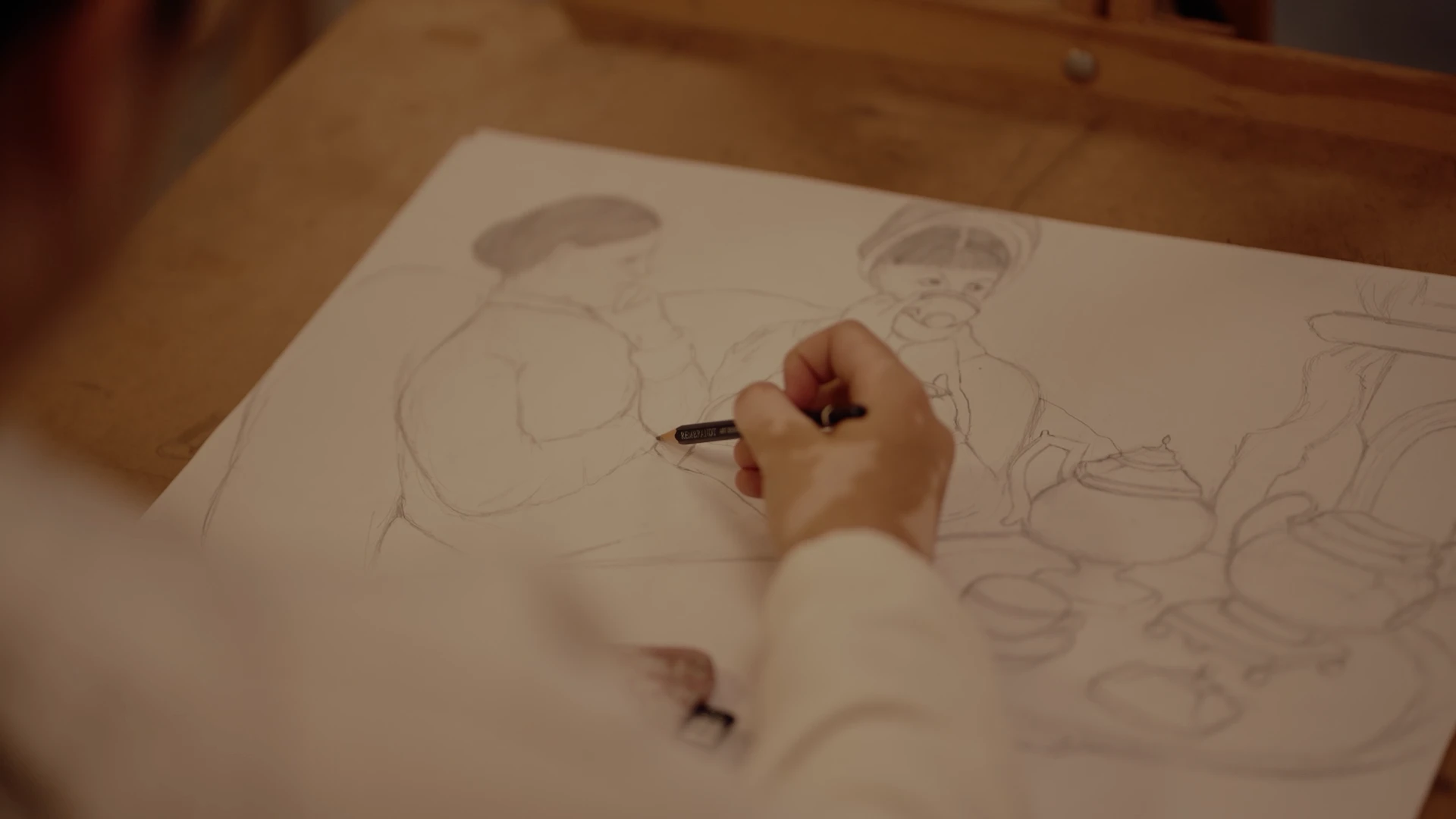
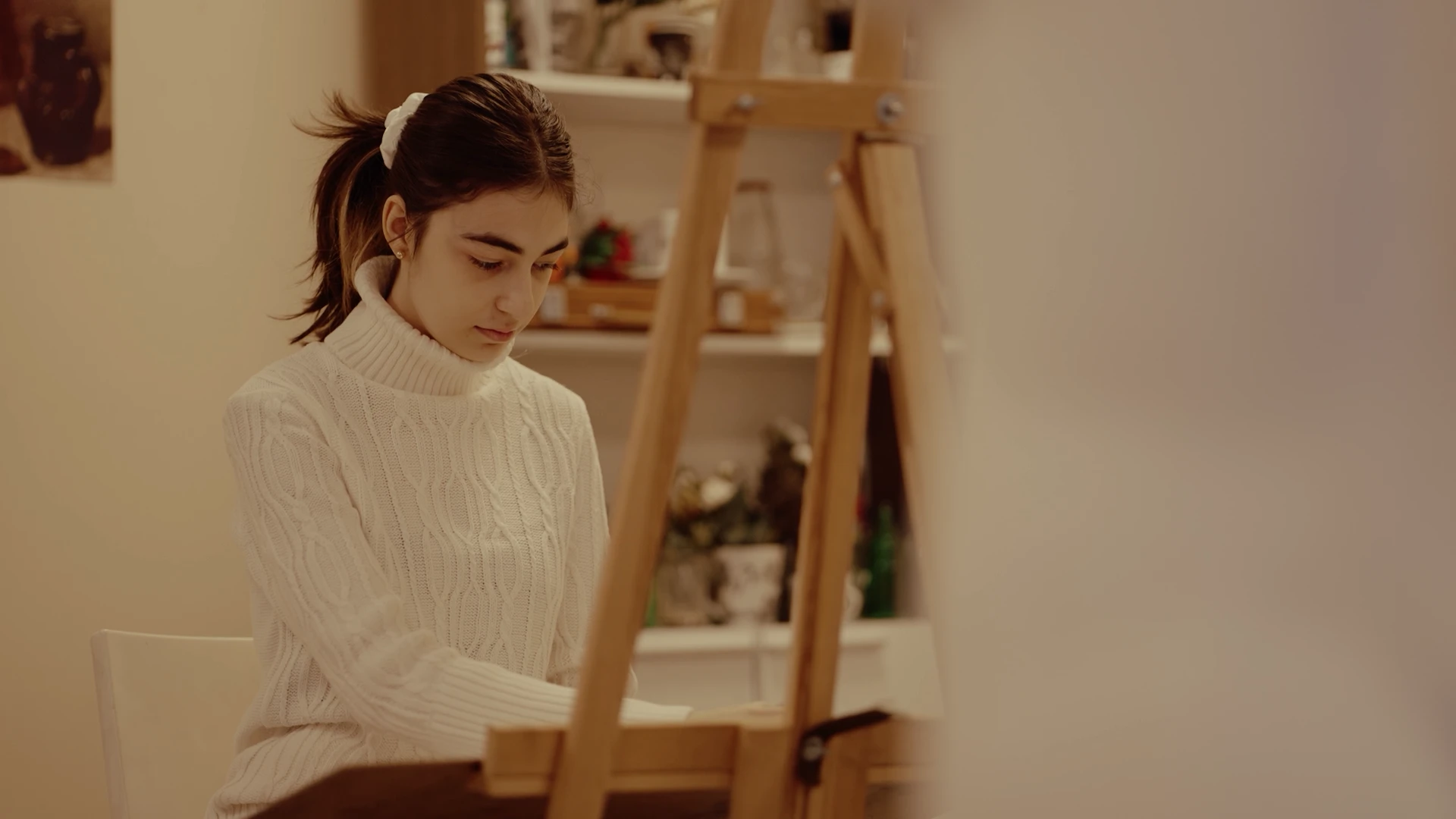
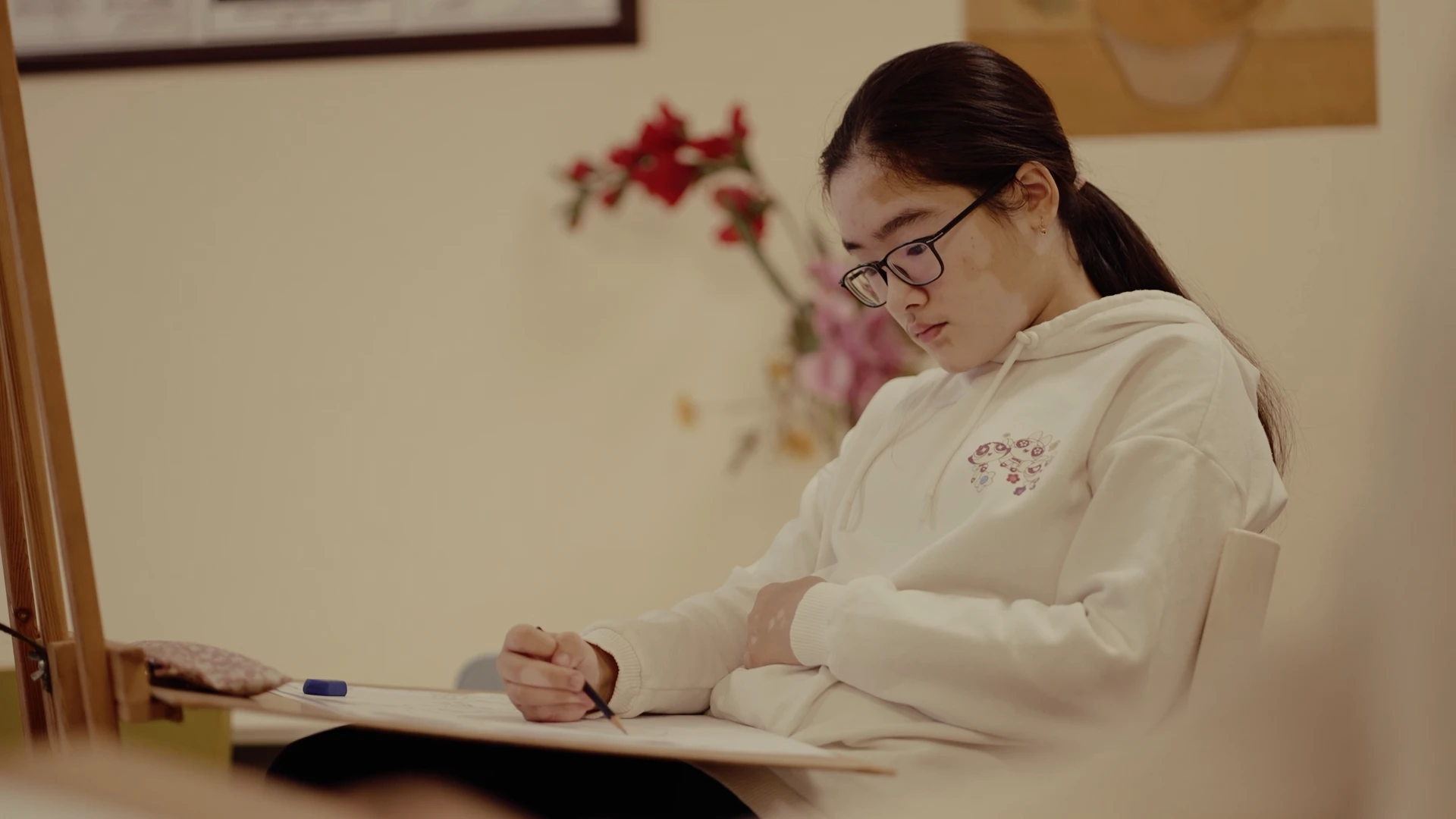
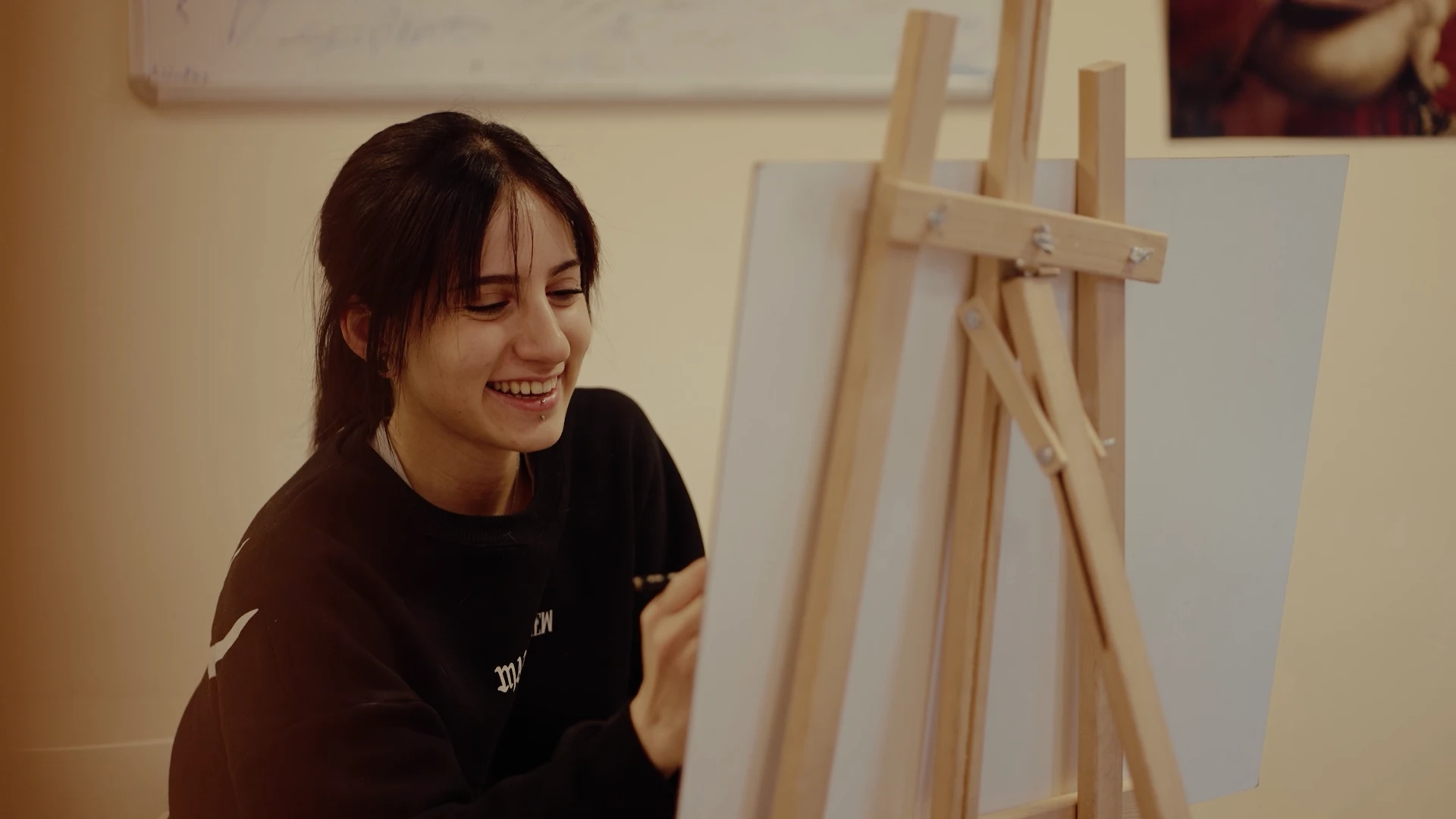
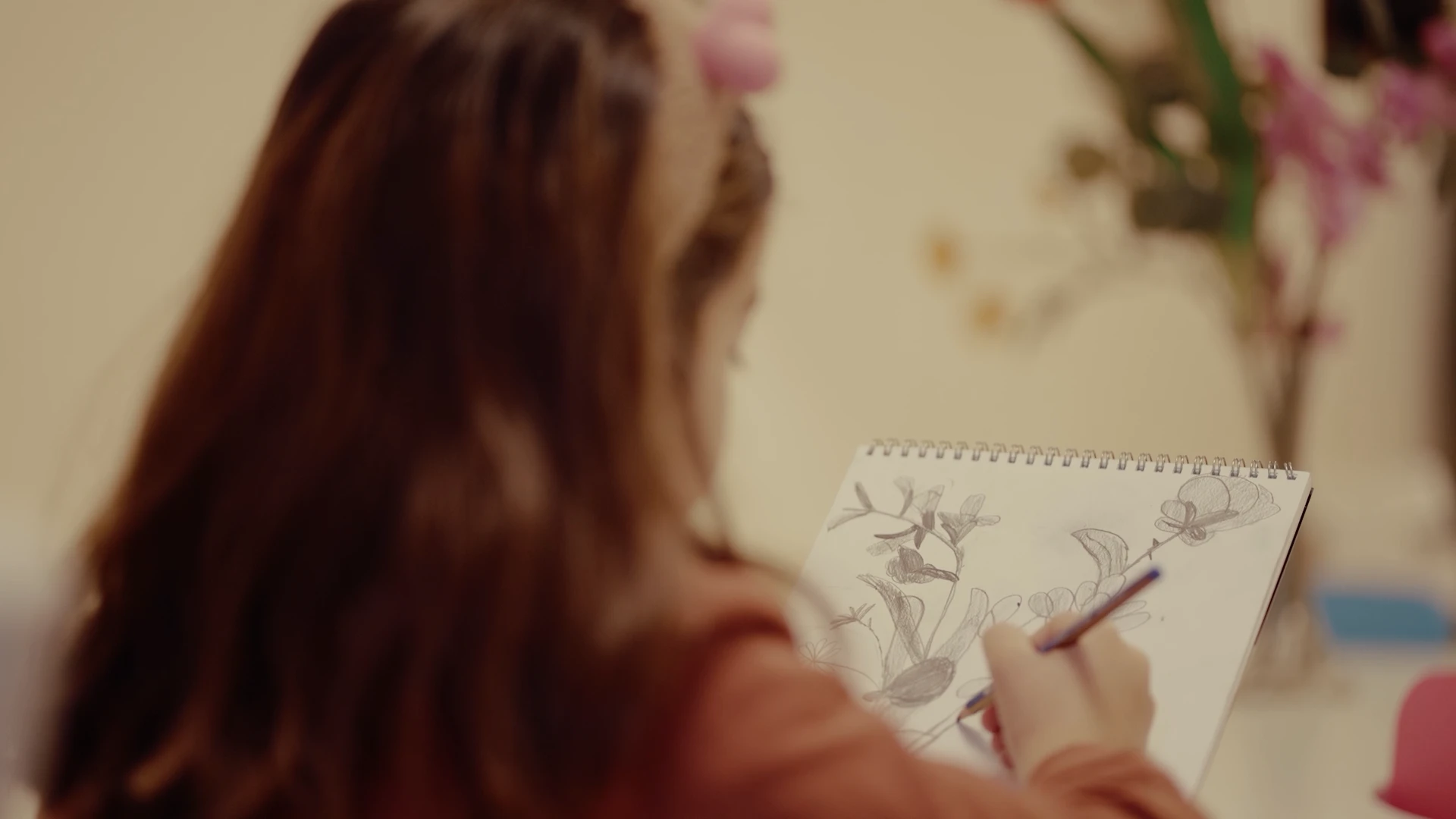
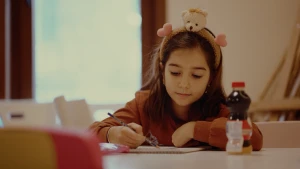
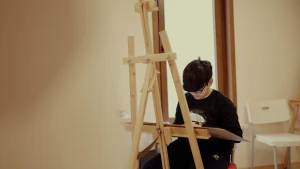
Painting Lessons are not merely about applying paint to a canvas or drawing lines on paper; they are a magical process that transforms the way we see the world, teaches us how to truly observe, and allows us to make our deepest emotions, thoughts, and dreams visible. We believe that every person carries within them an artistic spirit waiting to be expressed.
Instead of relying on the myth of an innate “talent,” bringing out this spirit requires mastering the right techniques, practicing with patience, and most importantly, being guided by the trained eye of a professional. Painting is like learning a language; as you learn the letters (lines), the words (forms), and the sentences (composition), the limits of the stories you can tell disappear. In Istanbul, the meeting point of all art forms, we at Taksim Sanat offer an inspiring studio environment where you can learn this creative language and tell your own story through colors and lines. Whether you want to relax and discover a new passion with our hobby painting classes, or take the first steps toward a professional career with our fine arts preparation programs, our goal is to provide a supportive and creative space where art lovers of all levels can discover their potential.
Taking a painting lesson is not just about learning how to hold a brush or pencil; it is also about understanding how light and shadow give form to an object, how the rules of perspective create the illusion of depth on a two-dimensional surface, and how color theory can completely transform the mood of a composition. This journey goes far beyond gaining technical skills—it is an adventure of awareness and self-discovery.
Painting Lessons: Bringing Out the Artist Within
Painting lessons allow individuals of all ages and levels to unleash their creativity while nurturing them both mentally and emotionally. Many people hesitate to paint by saying, “I can’t even draw a stick figure.” However, painting is not merely a talent one is born with—it is a skill set that can be learned and developed. This understanding forms the foundation of our teaching philosophy at Taksim Sanat. Our aim is not only to tell you what to do, but to teach you how to see.
A master artist does not look at an apple the way an ordinary person does. Instead of seeing it simply as a fruit, they notice the shine of the light on its surface, the transitions in color, the texture of the stem, and the shape of the shadow it casts on the table. The first skill we aim to develop in our lessons is precisely this “artist’s eye.” Once you gain this perspective, the world around you becomes an endless source of inspiration.
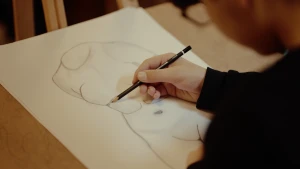
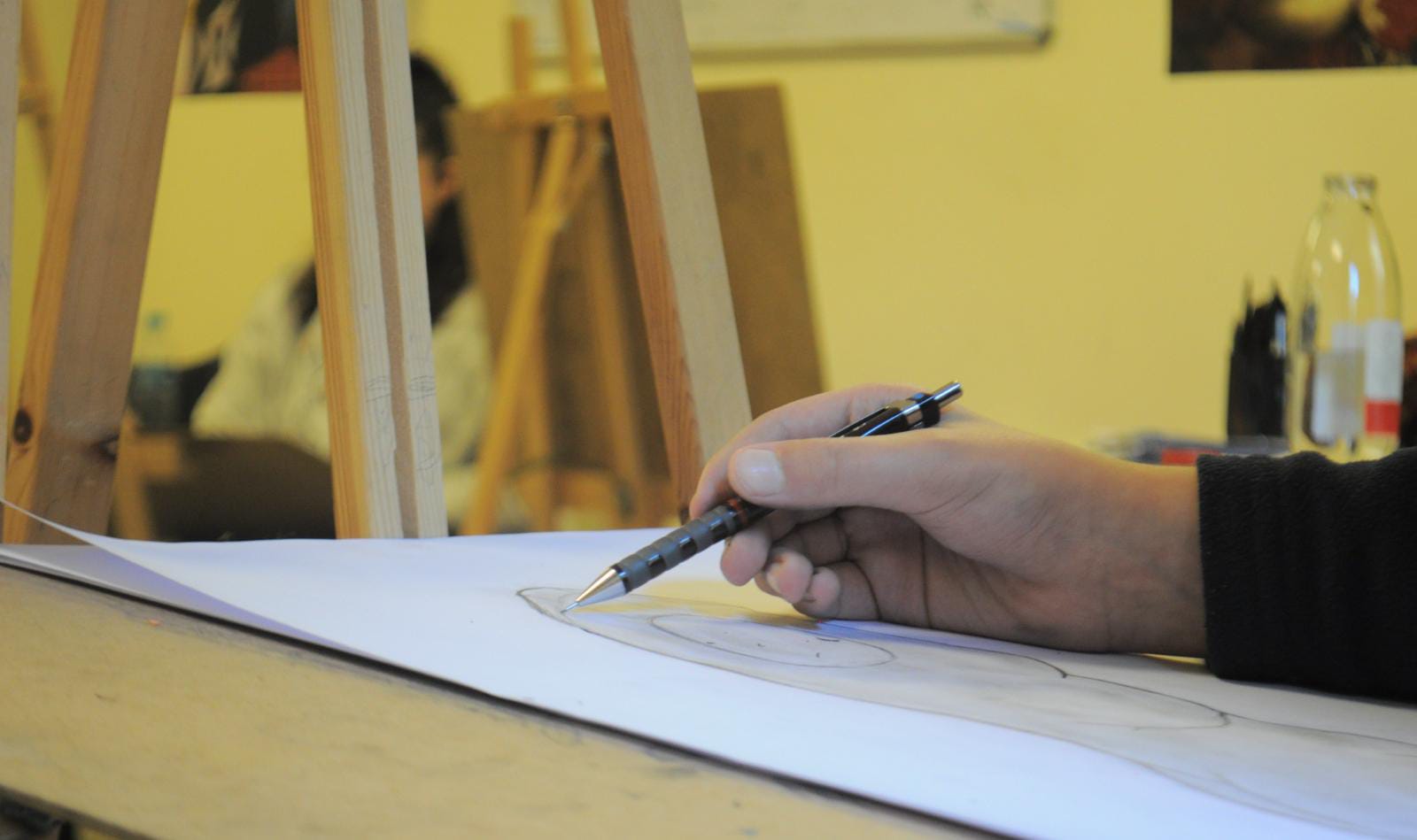
Our curriculum starts with the very basics—drawing. Also known as sketching, this foundational training teaches students how to accurately transfer objects onto paper using pencil techniques, maintaining correct proportions and creating a sense of volume and depth through light and shadow. This fundamental skill provides the foundation for all forms of painting, regardless of the technique you choose.
In our studio, fueled by Istanbul’s dynamic and inspiring atmosphere, we also offer a peaceful environment where students from calmer districts like Bahçeşehir can focus and create with a relaxed mind. The act of painting is almost meditative—the sound of the brush on the canvas, the blending of colors on the palette, and the gradual transformation of an image in your mind into a tangible form draws you into the moment and distances you from daily stress and worries. Thanks to this therapeutic effect, painting becomes not just an art form but also a means of mental cleansing and self-expression.
At Taksim Sanat, joining a painting lesson means not only learning technical knowledge but also meeting others who share your passion for art, drawing inspiration from one another’s works, and becoming part of a creative community. Whether you take the class as a hobby or with professional goals, each brushstroke becomes a step in discovering something new about yourself.
Why Learn Painting Under Professional Guidance? — Taksim Sanat Studio
Having a professional guide—a trained art instructor—significantly enhances your learning process, making it more efficient and accurate than trying to learn on your own. While online videos and resources may be useful, none can replace the personalized feedback from an experienced teacher observing your work in real time.
At Taksim Sanat Studio, we believe deeply in the importance of this personal guidance and the traditional master-apprentice dynamic. So, what are the tangible benefits of professional training? First of all, a personalized roadmap is created for you. Your instructor evaluates your current level, goals, and interests to design the most suitable learning plan. One of the biggest challenges in self-learning is not being able to recognize your mistakes. It is extremely difficult to understand on your own why the proportions in your portrait are incorrect, why your still life lacks depth, or why your colors look muddy. A professional instructor identifies these issues instantly and shows you exactly how to correct them: “Raise the chin a little,” “The shadow shouldn’t be this dark,” “You can create contrast by placing warm and cool colors next to each other.” Such personalized feedback accelerates your progress dramatically.
For students preparing for fine arts entrance exams, this professional guidance is not a luxury—it is an absolute necessity. A teacher who understands the dynamics of these exams, jury expectations, and the intricacies of portfolio preparation becomes the student’s greatest support in achieving their dream. At Taksim Sanat, we not only provide technical painting lessons but also offer motivation and strategic guidance to students preparing for these challenging exams.
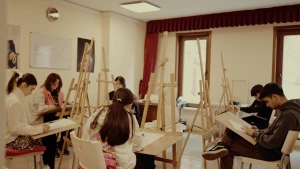
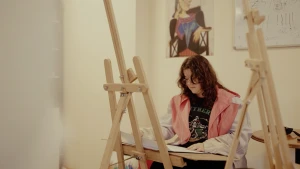
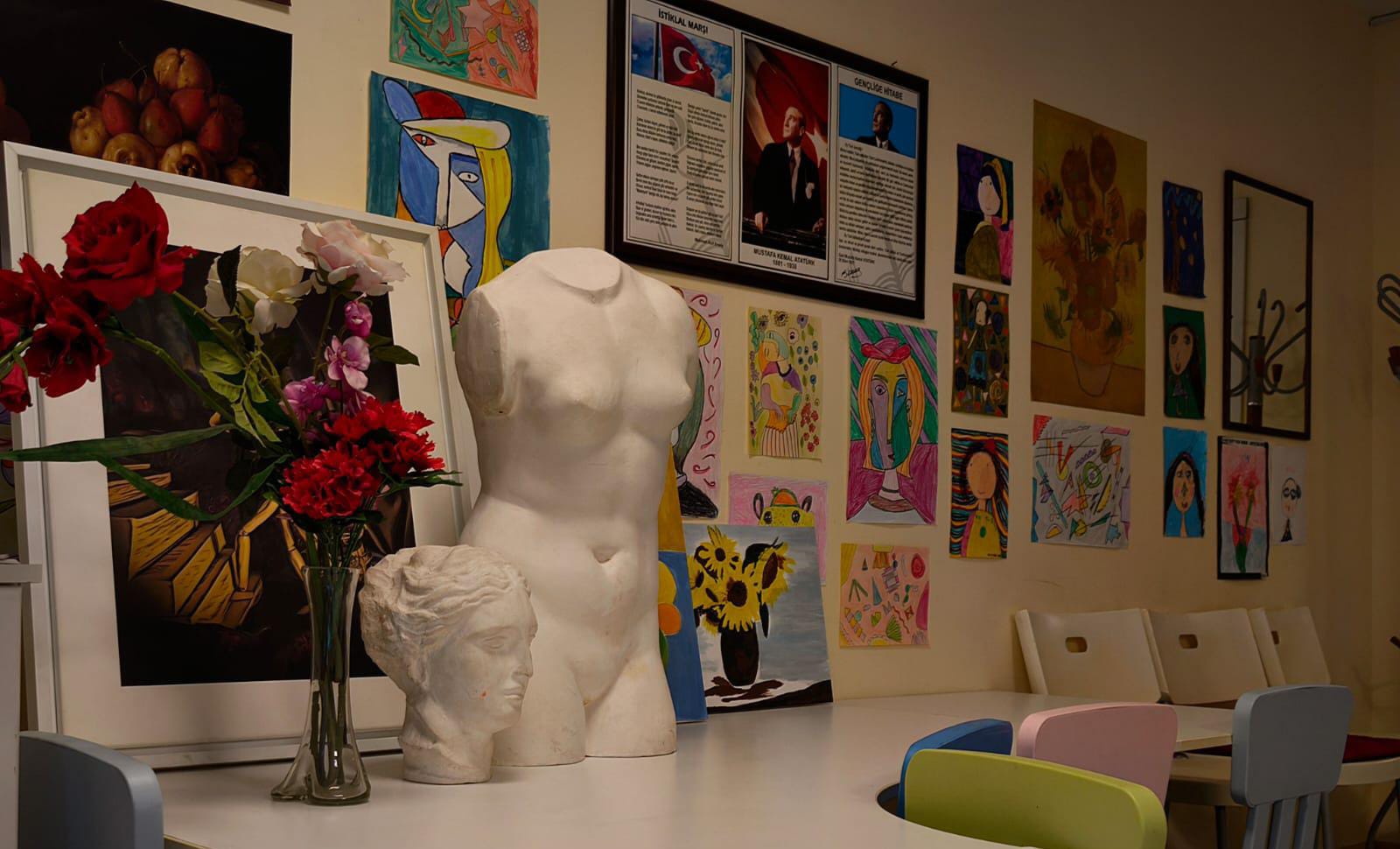
Our studio environment in Istanbul is more than just a classroom—it is a living, breathing space where students of different levels work together, learning from one another. Seeing how another student solves a problem or watching a technique being applied live can be incredibly inspiring. We invite art lovers from surrounding areas to join this dynamic environment and experience the artistic energy of the city center.
In short, learning painting under the guidance of a professional is like walking down a dark path with a flashlight—it not only shows you the way but also helps you notice the obstacles and the beauty along the journey.
The Foundations of Drawing: Learning to See and Transfer
The foundation of visual art is always drawing. Before diving into the magical world of colors and paints, understanding form, proportion, light, and space requires a strong drawing foundation—one of the most valuable tools an artist can have.
Charcoal Drawing: The Dance of Light, Shadow, and Form
Charcoal drawing is the starting point of art education. Using only black, white, and shades of gray, it teaches you to represent a three-dimensional object on a two-dimensional surface. This process begins with learning to observe correctly. It requires analyzing not only the outline of an object but also the space it occupies, the illuminated and shadowed areas on its surface.
Light and shadow are what give life to a drawing, adding volume and realism. Understanding how a light source interacts with an object—identifying the highlights, core shadows, reflected light, and cast shadow—is the essence of charcoal technique. Techniques such as hatching, cross-hatching, and blending are used to transfer these tonal values to paper. In our lessons, we teach these concepts through a step-by-step program that starts with simple geometric forms (cube, sphere, cylinder), moves on to more complex still-life compositions, and eventually reaches the human figure.
Perspective: Creating the Illusion of Depth on a Flat Surface
When we look at a drawing or painting, we can see that objects appear smaller as they move farther away from us, giving a sense of depth. This illusion is created by the rules of perspective. Perspective is especially essential in landscape, architectural, and interior drawings. The most basic forms are one-point and two-point perspective. In one-point perspective, objects parallel to us appear to recede toward a single vanishing point on the horizon line.
This is why train tracks or a straight road appear to meet in the distance. Two-point perspective is used when we see two sides of an object (for example, the corner of a building), with each side receding toward its own vanishing point on the horizon. Understanding and applying these rules correctly gives drawings an impressive sense of realism and three-dimensionality. In our lessons, we teach these theoretical concepts through simple, accessible exercises that help students perceive and transfer space accurately.
The Magical World of Color: Painting Techniques and Color Theory
Once a strong drawing foundation is established, the next step is to enter the emotional and expressive realm of color. Different painting materials offer different possibilities, and understanding the language of color is one of an artist’s most powerful tools.
Oil, Acrylic, and Watercolor: The Spirit of Each Technique
There are three commonly used painting mediums, each with its own unique character. Oil painting, preferred by masters since the Renaissance, is created by mixing pigments with oil (typically linseed oil). Its most notable feature is its slow drying time, which allows the artist to blend and layer colors over long periods.
Acrylic paint is a modern medium made from water-based polymer. It dries very quickly, making it ideal for fast-paced artists. It can be used thinly like watercolor or thickly to create textured surfaces similar to oil paint. Watercolor, made from pigments mixed with gum arabic and water, is transparent and luminous. The white of the paper acts as the lightest tone of the painting, and new tones are created by layering colors.
At Taksim Sanat, we guide students toward the technique—or combination of techniques—that best suits their interests and goals.
Color Theory: Creating Emotion and Atmosphere with Color
Colors in a painting are not randomly chosen tones. Like musical notes, colors interact with one another to create harmony or contrast, shaping the overall atmosphere and emotional impact of the artwork. Color theory helps us understand these relationships. The color wheel consists of primary (red, yellow, blue), secondary (orange, green, purple), and tertiary colors. Analogous colors (neighboring colors on the wheel) create harmony, while complementary colors (opposite colors on the wheel), such as red and green or blue and orange, create strong contrast.
Colors also have temperature: warm colors (red, yellow, orange) feel closer and more energetic, while cool colors (blue, green, purple) feel more distant and calming. Learning these concepts allows artists to use their palette intentionally and evoke specific emotions in the viewer.